The White House UFC 250 card was one of the most-watched MMA events in history, and a huge chunk of that audience had never sat through a fight night before. Welcome in. MMA can feel chaotic on first watch, but once you understand the structure, it's one of the most strategic sports in the world.
This is your crash course — written for the friend who just texted "okay but what was actually happening?" the morning after.
What Mixed Martial Arts Actually Is
Mixed Martial Arts (MMA) is exactly what the name says: a combat sport where fighters use techniques from multiple martial arts under one unified ruleset. The main disciplines you'll see:
- Boxing — punches, head movement, footwork.
- Muay Thai / Kickboxing — punches, kicks, knees, elbows, and clinch work.
- Wrestling — takedowns, takedown defense, controlling position on the ground.
- Brazilian Jiu-Jitsu (BJJ) — submissions (chokes and joint locks) and ground control.
A complete MMA fighter has to be dangerous standing up, in the clinch, and on the ground. That's why the sport is so hard — and so fun to watch once you see what each fighter is trying to do.
Amateur vs. Professional: The Two Halves of a Fight Card
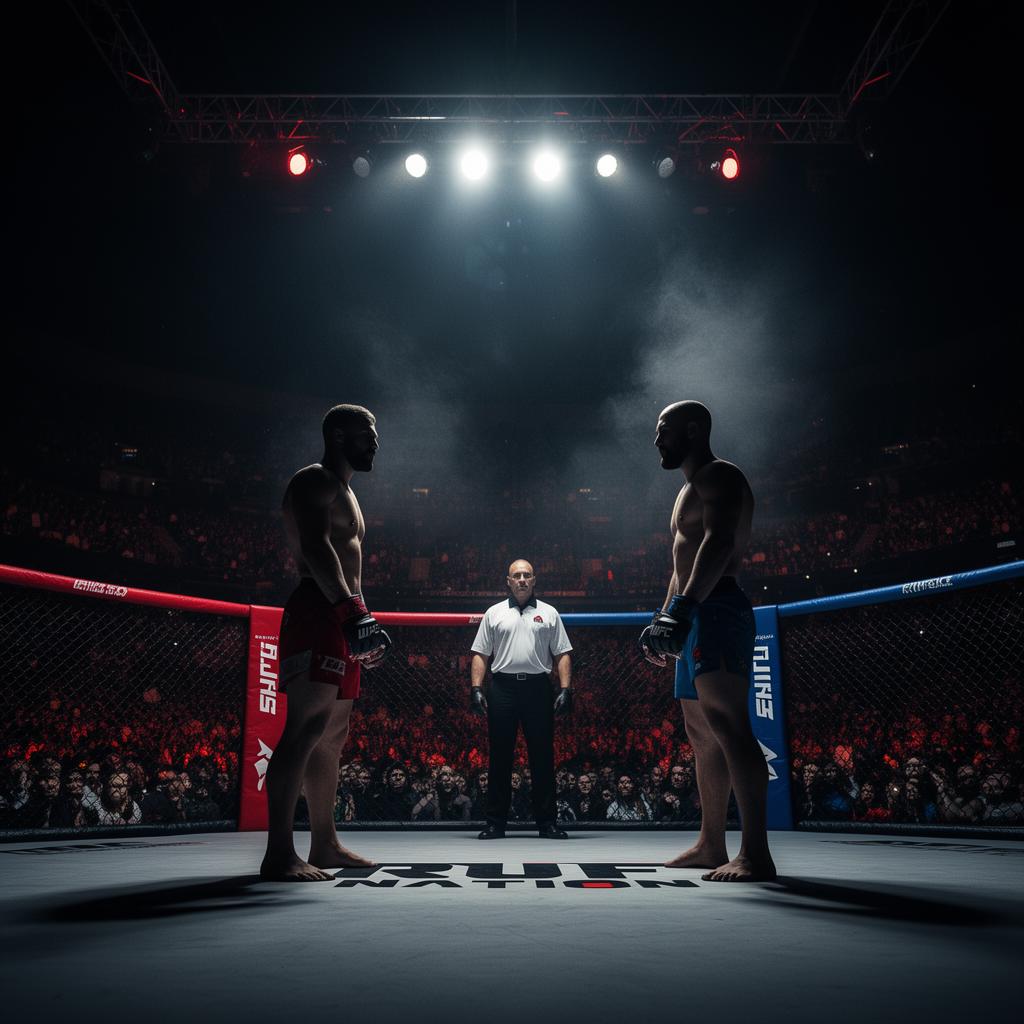
Every regional MMA event — including every RUF Nation fight card at Celebrity Theatre — is split into two halves:
Amateur fights come first. Amateurs are the future of the sport. They fight three 3-minute rounds. Protective gear requirements and options vary state-by-state — some commissions require shin guards or headgear, others limit what can be worn. Elbows to the head are typically not allowed at the amateur level. This is where prospects build their record before turning pro. Many fighters you now see in the UFC fought amateur at RUF — that's the whole point of a developmental promotion.
Professional fights make up the back half of the card. Pros fight three 5-minute rounds for a standard bout, or five 5-minute rounds for a championship or main event. Elbows are legal. The pace, power, and skill jump up significantly. This is where careers are made and title shots are earned.
If you want to *see* the difference yourself, browse our full video library — amateur fights, pro fights, knockouts, and submissions, all in one place.
How Rounds and Scoring Work
A round is just a timed segment of the fight — 3 or 5 minutes — separated by a one-minute rest. If nobody finishes the fight (KO, TKO, or submission), it goes to the judges.
Three judges score each round on the 10-point must system:
- The winner of the round gets 10 points.
- The loser usually gets 9 (or 8 if they were badly hurt or dominated).
- After all rounds, the scores are added up. Two of three judges agreeing = decision win.
Judges score based on effective striking, effective grappling, aggression, and cage control — in that order. That's why you'll hear commentators say "he stole that round late" — a knockdown or near-finish in the final seconds can swing a 10-9.
The Three Ways to Finish a Fight
- Knockout (KO) — one fighter is rendered unconscious by a strike. Lights out.
- Technical Knockout (TKO) — the referee, doctor, or corner stops the fight because a fighter can't intelligently defend themselves anymore. Ground-and-pound stoppages count here.
- Submission — a fighter "taps out" (physically tapping the mat or their opponent) to escape a choke or joint lock. Tap or nap.
If none of those happen, the judges' scorecards decide it.
Striking 101: What You're Actually Watching
When two fighters are on their feet trading shots, here's what's happening:
- Jab — the lead-hand punch. Sets up everything else. Looks light, controls distance.
- Cross / Straight — the power punch from the back hand. This is what ends fights.
- Hook — a looping punch that comes from the side. Brutal at close range.
- Leg kick — looks unglamorous, wins fights. Chop the lead leg enough and your opponent can't move.
- Head kick — high-risk, high-reward. When it lands clean, it's a highlight reel.
- Knees and elbows — clinch and ground weapons. Elbows cause the cuts you see.
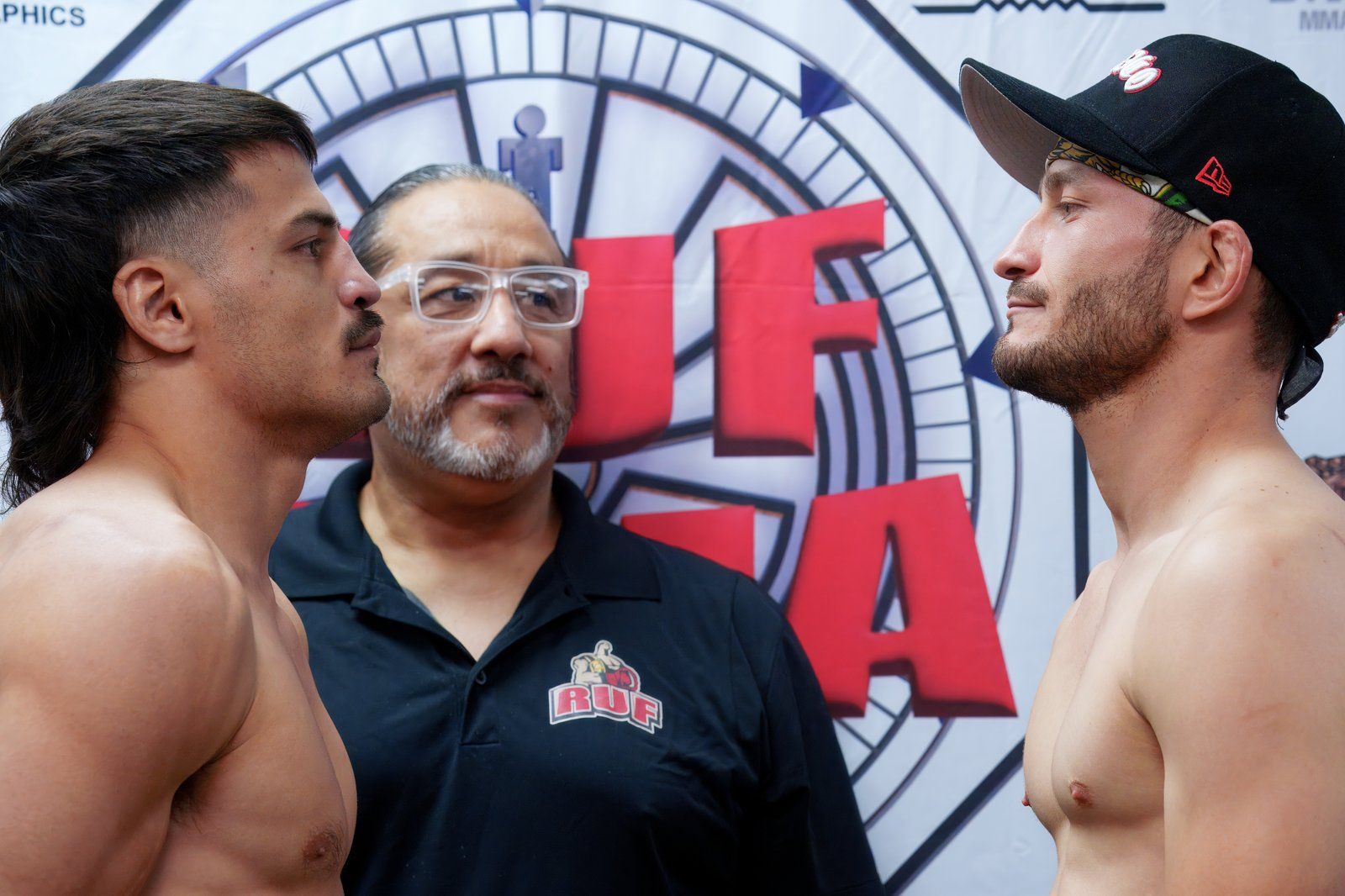
Want to see a textbook striking war? Watch the RUF 68 main event recap — Kevin Natividad vs. David Perez went the full distance and showed exactly how rounds are won at the highest regional level.
Grappling 101: When the Fight Hits the Floor
When fighters tie up or hit the ground, the action doesn't stop — it just changes language.
- Takedown — getting your opponent to the mat. Single-leg, double-leg, trip, throw.
- Top position / Guard — the fighter on top is usually scoring; the fighter on bottom (in "guard") is working for submissions or to stand back up.
- Mount / Back control — dominant positions. The fighter on top or on the back is one step from finishing.
- Submissions — rear-naked choke, guillotine, armbar, triangle, kimura. Each one attacks either the neck or a joint.
A "boring" ground exchange to a new fan is often a chess match between two black belts where one wrong move ends the fight in three seconds.
Weight Classes (The Short Version)
Fighters are matched by weight so size doesn't decide the fight. The most common classes you'll see on a RUF card:
- Flyweight — 125 lbs
- Bantamweight — 135 lbs
- Featherweight — 145 lbs
- Lightweight — 155 lbs
- Welterweight — 170 lbs
- Middleweight — 185 lbs
- Light Heavyweight — 205 lbs
- Heavyweight — up to 265 lbs
Lighter weights are usually faster and higher-volume. Heavier weights hit like a truck. Pick your flavor.
From Local Cage to the UFC
Here's the part most new fans don't realize: the UFC isn't where fighters *start* — it's where they *arrive*. Almost every fighter on that White House card came up through regional promotions, took amateur fights, racked up a pro record, and earned their shot.
That's exactly what RUF Nation is. We're Arizona's premier MMA promotion, and we've put fighters on the UFC roster, Bellator cards, and PFL contracts. Names like Waldo Cortes-Acosta — currently the #4 ranked UFC heavyweight — fought and cornered at RUF. The pipeline is real.
Want to see who's next? Check the current roster of RUF fighters — many of them will be on UFC cards in the next few years.
How to Watch Your First Live Card
The single best way to fall in love with MMA is to see it live. Cage-side, you hear every punch land, every corner instruction, every gasp from the crowd on a near-submission. TV doesn't capture it.
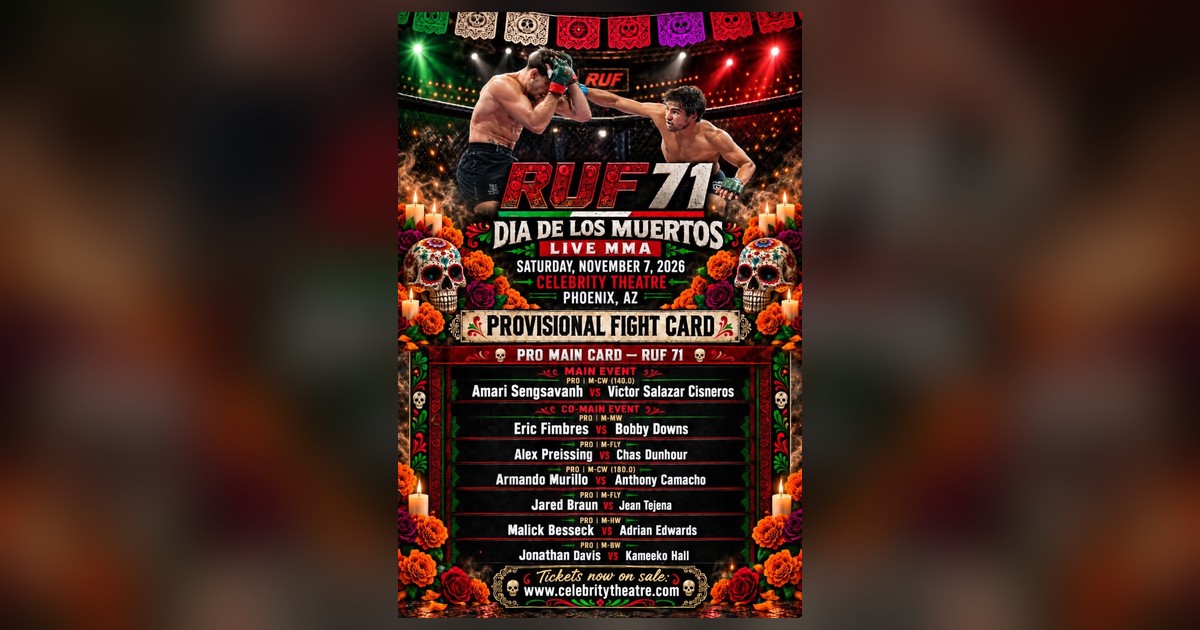
Our next event is RUF 69 at Celebrity Theatre in Phoenix on July 11, 2026. Fight card is forming now and tickets are on sale now — grab yours before they're gone.
Until then, dive into the RUF video archive and pick a fight. You already know enough to watch it like a fan now — and you'll be surprised how fast you start sounding like one.
Welcome to MMA. Glad you're here.